
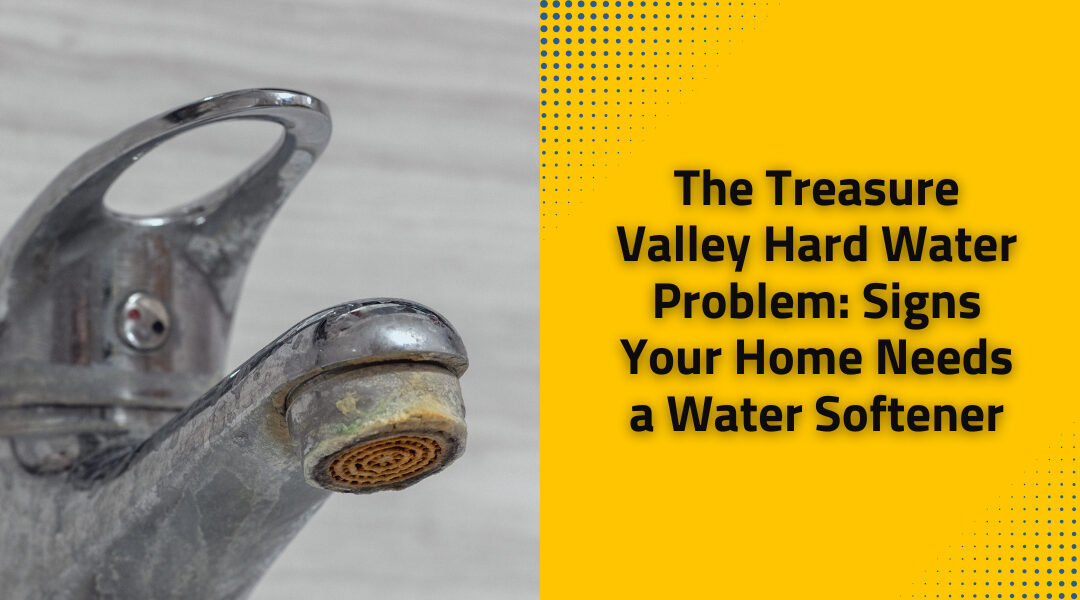
If you have lived in Boise, Meridian, Nampa, or Caldwell for any length of time, you have almost certainly seen the signs, even if you never quite put them together. The white crust on the shower head that comes back a week after you scrub it off. The spots on the dishwasher-clean glassware that no rinse aid seems to fix. The way the soap in the shower never quite lathers like it did at your parents’ house back east. Every one of those small annoyances traces back to the same source, and it is not something you are doing wrong. It is the water itself.
The Treasure Valley sits on some of the harder water in the western United States. Depending on where you live and whether you are on municipal or well water, hardness levels typically run anywhere from moderately hard to very hard, with well water on the eastern edges of the valley often testing higher still. That mineral content, mostly calcium and magnesium picked up from the geology of the Snake River Plain aquifer, is what causes every one of the symptoms above and a lot more that are less obvious.
What Hard Water Is Actually Doing In Your Home
The visible stuff is annoying. The invisible stuff is expensive.
Every time hard water flows through a pipe, an appliance, or a fixture, it leaves a little bit of mineral behind. Over years, that buildup coats the inside of your plumbing, restricts the flow through your fixtures, cakes onto the heating element in your dishwasher, and settles into the bottom of your water heater as insulating sludge. The water heater in particular takes a beating in Treasure Valley homes. We covered the specifics in a recent post on water heater lifespan, but the short version is that hard water can knock years off the life of a tank simply by forcing the burner to work harder and longer to heat through a growing layer of scale.
Your washing machine, dishwasher, refrigerator ice maker, and any humidifier tied to the furnace all deal with the same accelerated wear. Manufacturers publish appliance lifespans assuming average water quality. Hard water shortens those numbers, sometimes significantly. If it feels like appliances in your home tap out faster than they should, hard water is often the reason.
Then there is the day-to-day. Soap and detergent do not lather or rinse cleanly in hard water, which is why laundry can feel stiff, hair can feel filmy, and skin can feel dry no matter how much lotion you use. You end up using more shampoo, more dish soap, and more laundry detergent to compensate, which adds up quietly month after month.
The Signs Your Home Has Crossed The Threshold
A lot of homeowners live with hard water symptoms without ever considering treatment because they assume it is just how water works. It is not. If any of the following sound familiar, your water is telling you it is time to consider softening.
Persistent white or greenish crust on faucets, shower heads, and around drains that returns within days of cleaning. Spotted glassware and dull dishes coming out of the dishwasher despite rinse aid and detergent. A ring in the toilet bowl that reappears no matter how often you scrub. Scale visible around the base of any water-connected appliance. Reduced water pressure at fixtures where the aerators clog with mineral flakes. Dry skin, dull hair, and laundry that feels rough even fresh out of the dryer. And a water heater that has always run louder than it should, popping and rumbling as it cycles.
Any two or three of these and you have hard water actively costing you money. Testing confirms the exact hardness level, but if the symptoms are that visible in daily life, the answer is already leaning strongly in one direction.
Choosing The Right System For Your Home
There is no single water softener that is right for every home in the valley. What works for a two-bedroom bungalow in the North End is not what a four-bedroom on a well outside Kuna needs. We install and service three main product lines, each suited to different situations.
The Nugen water softener is a traditional salt-based system built for effectiveness and durability, and it is a strong fit for homes with moderate to high hardness looking for the classic softened-water experience. The Sterling water softener is another salt-based option with a focus on efficiency and long-term reliability, and it holds up well against the harder water common in the outer parts of the valley. The NUVO water softener is a salt-free conditioning system, which is worth considering for homeowners who do not want to deal with salt bags, are on sodium-restricted diets, or prefer a more compact installation.
Picking the right one depends on your water test results, household size, plumbing layout, and personal preferences. Our team walks through all of that with you before making a recommendation, and there is no pressure to go with a system that is bigger than your home actually needs.
The Payoff Shows Up Faster Than You Expect
Homeowners who install a softener usually notice the difference within a few days. Soap actually lathers. Skin and hair feel different in the shower. Glassware comes out of the dishwasher clean. Within a few months, the scale buildup on fixtures stops recurring and appliances start operating more efficiently. Over years, the savings on extended appliance life, better water heater performance, and reduced soap and detergent use meaningfully offset the cost of the system itself.
If you have been putting up with hard water symptoms, and most Treasure Valley homeowners have, give us a call at (208) 362-6200 or request service online. We will test your water, walk through the options, and help you pick the system that actually makes sense for your home. Fast. Friendly. Fixed. Just Drake it.
Discover more from Drake Mechanical
Subscribe to get the latest posts sent to your email.