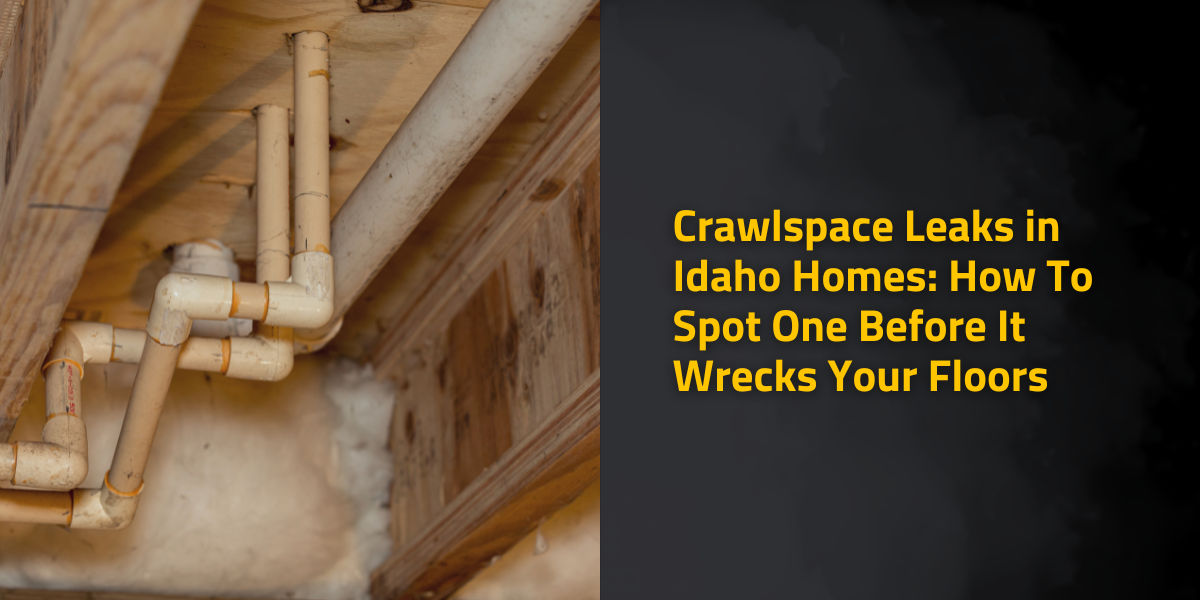
Of all the plumbing problems a homeowner can face, a crawlspace leak is one of the sneakiest. There is no burst pipe spraying water across the kitchen, no dramatic flood pointing you toward the problem. Instead, water is leaking slowly in the dark, enclosed space beneath your home, often for weeks or months, before anything becomes obvious upstairs. By the time most homeowners realize what is happening, the leak has usually been running long enough to cause real damage to the structure above it.
Most homes across Boise, Meridian, Nampa, and Caldwell are built over crawlspaces or partial basements rather than slab foundations, which means a huge share of the water supply and drain lines run through a space nobody ever looks at unless something forces them to. That out-of-sight, out-of-mind setup is exactly why crawlspace leaks tend to go unnoticed so much longer than a leak in a visible part of the house.
Why Crawlspace Leaks Happen
Plumbing running through a crawlspace deals with conditions that pipe elsewhere in the house does not. Idaho winters bring hard freezes, and a crawlspace that is not properly insulated or sealed can get cold enough to freeze and crack a supply line, especially near the perimeter of the foundation where cold air infiltrates most easily. Copper and galvanized lines running through the space can corrode over time from ground moisture and humidity, especially in a hard water market like ours where mineral content accelerates wear on fittings and joints. Shifting soil, settling, or even something as simple as a fitting that was never quite tightened during original construction can create a slow leak that takes months or years to fully reveal itself.
Once a crawlspace leak starts, it does not resolve on its own. Water pools on the ground beneath the house, soaks into insulation, and works its way into the wood framing and subfloor above, and it will keep doing that until someone finds it and fixes it.
The Warning Signs to Watch For
The single most common early sign of a crawlspace leak is an unexplained spike in your water bill. If usage has not changed but your bill climbs noticeably over one or two billing cycles, that is often the first real clue that water is escaping somewhere it should not be. It is easy to write off as a billing fluke, and it is worth double-checking, but it is also worth taking seriously.
A musty or mildew smell that seems to come from the floor, particularly in a specific room, is a strong indicator. Crawlspaces are already prone to some moisture, but a leak dramatically increases humidity in the space, and that smell tends to work its way up through the floor and into the living area above it. Sagging, soft, or spongy flooring in one part of the house is another major sign, since sustained moisture will weaken subfloor and framing over time. If a floor feels different underfoot than it used to in one specific area, that is worth investigating.
The sound of running water when every fixture in the house is off is worth paying attention to as well. If you can hear water moving somewhere beneath the floor with nothing turned on, that is a strong indicator of an active leak. A water meter that keeps spinning after every fixture has been shut off is an even more definitive test, and one you can do yourself. Locate your meter, confirm nothing inside or outside is using water, and watch the dial. If it is still moving, water is going somewhere it should not be.
Visible signs, if you do go down and look in the crawlspace itself, include standing water or damp soil beneath the house, water stains or corrosion on visible pipes and fittings, mold or mildew growth on floor joists, and insulation that has fallen down or is visibly wet. Higher-than-normal humidity in the crawlspace, condensation on ductwork, or a general increase in pest activity underneath the house can also point to a persistent moisture source.
Why Waiting Makes This Worse
A crawlspace leak does not stay small or contained. Left alone, it continues to saturate the soil, insulation, and wood framing beneath your home, which can eventually lead to rot, structural weakening of floor joists, and mold growth that affects indoor air quality throughout the house, not just in the crawlspace. Pest issues often follow, since a damp crawlspace is an attractive environment for a range of unwanted visitors. And every day the leak runs is water you are paying for that never reaches a faucet.
The financial gap between catching a crawlspace leak early and catching it late is significant. An early repair might mean a straightforward fix to a single fitting or a short section of pipe. A late discovery can mean subfloor replacement, structural repair, and mold remediation stacked on top of the plumbing work itself.
How We Find and Fix a Crawlspace Leak
Diagnosing a crawlspace leak accurately starts with a proper inspection of the space itself, along with electronic leak detection equipment when the source is not immediately visible. Once we know where the leak is, we walk you through the realistic options for repair, whether that is a direct fix to the affected section of pipe or a broader look at whether other sections of aging plumbing in the same area are likely to follow. We will give you a straight recommendation based on what we actually find, not the most expensive option by default.
If You Suspect a Crawlspace Leak
If your water bill has spiked, you have noticed a musty smell or soft flooring, or your water meter is spinning with everything off, do not wait to see if it resolves itself. It will not. The sooner a crawlspace leak is found, the less it costs to fix and the less damage it does to your home’s structure in the meantime.
Give us a call at (208) 362-6200 or request service online and we will get a technician out to track it down. Fast. Friendly. Fixed. Just Drake it.